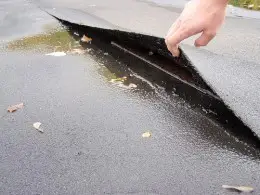
Elastomeric Membrane Flat Roofs: A Montréal Owner's Guide
By Gerald Garcia, roofer for 15+ years · · 6 min
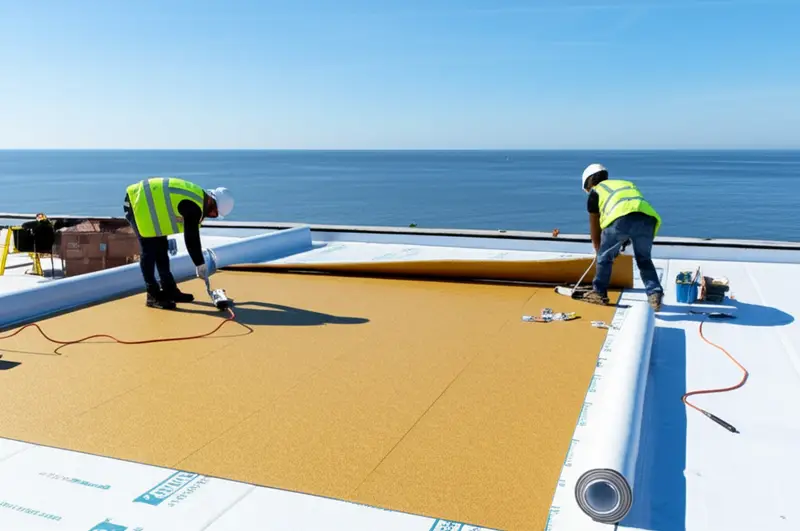
An elastomeric membrane is a flat roof covering made of SBS modified bitumen, usually installed as two heat-welded plies: a base sheet and a granule-surfaced cap sheet. It stays flexible in deep cold, handles building movement well and is easy to patch, which is why it has become the go-to system for Montréal plexes and commercial flat roofs. Installed and maintained properly, modified bitumen is generally expected to last around 20 years.
If you own a duplex, triplex or commercial building with a flat roof, here is what you should know before you repair or replace it.
What is an elastomeric roof, exactly?
Asphalt with a rubbery backbone
“Elastomeric” refers to the polymer blended into the asphalt: SBS, short for styrene-butadiene-styrene. SBS gives the bitumen rubber-like stretch, so the membrane can expand and contract with the roof through our big temperature swings without cracking.
According to the RCABC Roofing Practices Manual, these are prefabricated membranes reinforced with polyester mats, fibreglass mats or a combination of both. The reinforcement is what gives the sheet its tear and puncture resistance.
Two plies, one watertight skin
On a flat roof, an elastomeric system goes down in two layers:
- Base sheet: adhered, welded or fastened to the substrate. It is the first waterproofing barrier.
- Cap sheet: welded over the base sheet. Its granule surface shields the asphalt from UV and weather.
The two plies are fused across the whole surface. If the cap sheet gets scuffed or nicked, the base sheet underneath keeps protecting the building. Depending on the product, membranes are torch-applied, set in cold adhesive or hot asphalt, or self-adhered.
The details matter most
Flat roofs rarely leak in the middle of the field. They leak at the edges: parapet upstands, flashing, drains, plumbing vents, skylights and rooftop equipment curbs. A premium membrane badly tied into a drain will still leak. This is where an experienced roofer earns their keep.
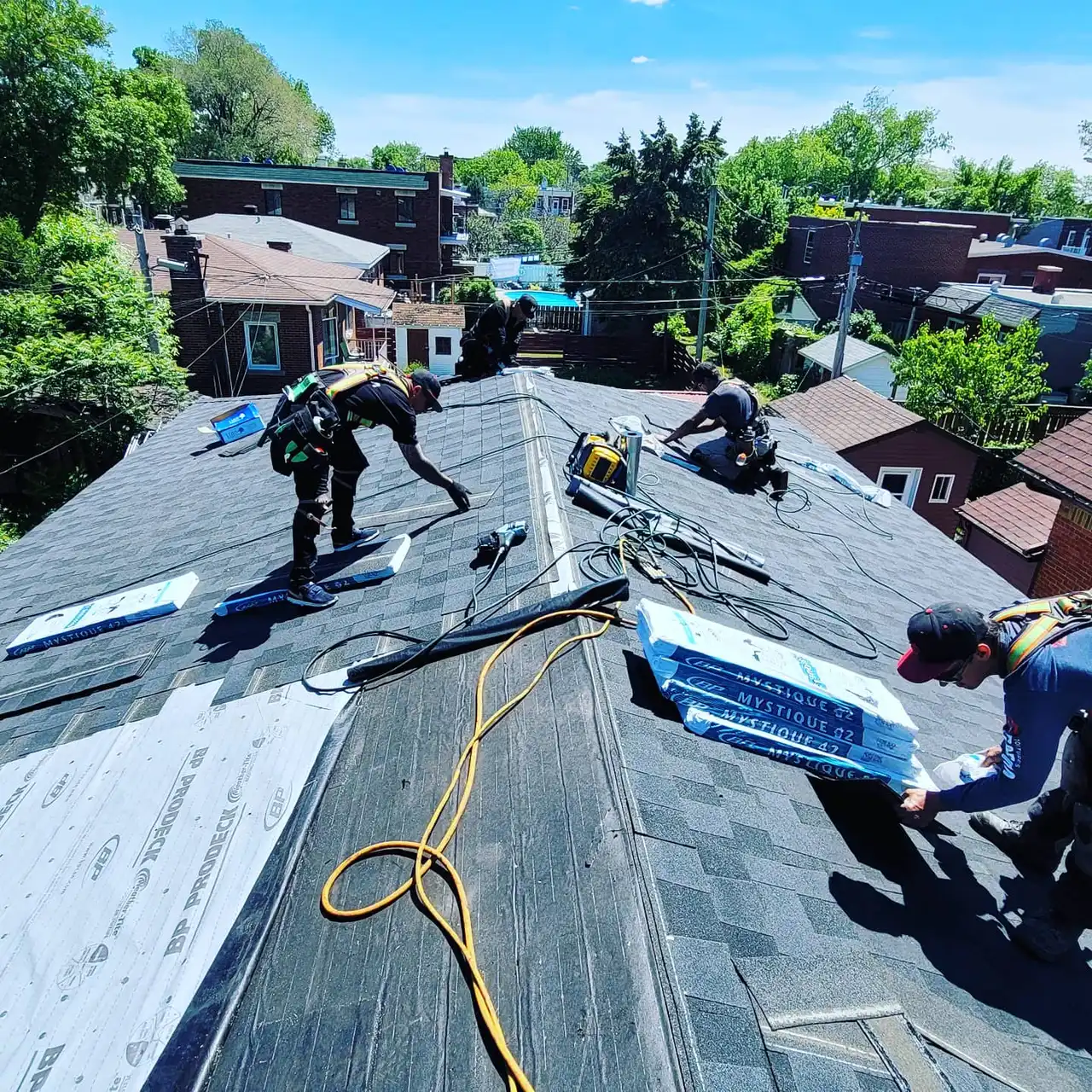
Elastomeric vs. tar and gravel, TPO and EPDM
Tar and gravel (built-up roofing)
For decades, the classic Montréal flat roof was tar and gravel: several layers of felt mopped with hot asphalt, finished with a gravel bed. It is durable but heavy, and tracking down a leak under the gravel is slow work. Some boroughs, such as Le Sud-Ouest, now prohibit asphalt, tar and gravel coverings.
Single-ply membranes: TPO and EPDM
TPO (thermoplastic polyolefin) and EPDM (synthetic rubber) are installed in a single layer and show up mostly on large commercial roofs. They can be good choices, but because there is no second ply underneath, everything depends on the quality of the seams.
How long each system lasts
The home inspection association InterNACHI publishes a widely used estimated life expectancy chart. For flat roof coverings it lists:
| Roof covering | Estimated life (InterNACHI) |
|---|---|
| Modified bitumen (elastomeric) | 20 years |
| Built-up roof (tar and gravel) | 30 years |
| EPDM rubber | 15 to 25 years |
| TPO | 7 to 20 years |
InterNACHI is clear that these are guidelines, not warranties. Climate, design, material quality and maintenance all push real-world numbers up or down. A flat roof where water ponds for days after every rain will age faster than one that drains properly.
Why elastomeric suits Montréal plexes
Montréal’s duplexes and triplexes typically have flat roofs with parapets, interior drains and neighbours on both sides. A two-ply elastomeric system fits that reality well:
- Cold-weather flexibility: SBS keeps the membrane pliable through hard frosts and freeze-thaw cycles.
- Lighter load: no gravel bed means less dead weight than tar and gravel.
- Simple repairs: a damaged area can be cleaned and covered with a welded patch.
- Clean detailing: the membrane forms neatly around parapets, drains and vents.
- White cap sheet options: reflective, white-granule cap sheets are available for buildings that need to meet city requirements.
Montréal’s white roof rules
That last point matters. The City of Montréal states that a permit is generally required to install or replace the covering on a flat or low-sloped roof. Many boroughs also require a white material, a green roof or a covering that meets a minimum solar reflectance index (SRI), and that threshold differs from one borough to the next. Permit applications typically ask for a technical sheet showing the product’s SRI.
If you are planning renovation work on a building with two to five units, the city’s RénoPlex subsidy program also notes that flat roofs must be renewed with a white membrane. Check the eligibility rules before signing a contract.
Warning signs your membrane is wearing out
Book an inspection if you notice:
- blisters or bubbles under the membrane;
- open or lifting seams, especially at laps and upstands;
- cracking or crazing on the surface;
- heavy granule loss exposing the black asphalt;
- ponding water that sits long after the rain stops;
- loose flashing on parapets or around rooftop units;
- ceiling stains on the top floor.
One isolated defect is usually a repair. When problems show up across the whole roof, a full replacement often makes more sense than chasing leaks.
Keeping an elastomeric roof in shape
A little attention goes a long way:
- Inspect in spring and fall, and after major storms.
- Clear drains and strainers of leaves, debris and ice.
- Check upstands and flashing along parapets and around skylights.
- Limit foot traffic and keep heavy or sharp objects off the membrane.
- Use non-metal tools for snow removal when snow piles up.
- Fix small cuts and open seams quickly, before water reaches the insulation.
Repair or replace?
A sound membrane with one bad seam or a torn flashing at the parapet is a repair job: the area is cleaned, dried and covered with a welded patch or new flashing. Replacement becomes the better option when:
- leaks keep returning in different spots;
- blisters, cracks and open seams are spread across the roof;
- the insulation or deck under the membrane is wet or soft;
- the roof already carries many old patches;
- the existing covering no longer meets your borough’s requirements and you are planning major work anyway.
A full replacement usually means removing the old covering down to the deck, repairing any damaged wood or insulation, correcting drainage where water ponds, then installing the base sheet, cap sheet and new flashing at every parapet, drain and penetration. Because a permit is generally required in Montréal, the work should start with the right technical sheets and a clear scope.
Regular roof maintenance catches these issues early, while they are still small repairs.
Get your flat roof assessed
Les Toitures Garcia was founded by Gerald Garcia and has more than 15 years of experience on residential and commercial roofs across Greater Montréal, Laval, the North Shore and the South Shore. We are RBQ licensed (licence 5705-4066-01) and fully insured. Learn more about our flat roof services in Montréal.
For a free inspection or estimate, call (514) 451-6636 or request an estimate online. We reply within 24 hours.