Ice Dams on Your Roof: Why They Form and How to Stop Them for Good
By Gerald Garcia, roofer for 15+ years · · 6 min
Ice dams form when heat escaping from your house warms the attic and melts the snow on your roof. The meltwater runs down to the cold eaves, refreezes, and builds a ridge of ice that traps more water behind it, which can then seep under the shingles. The short-term fix is to clear snow and open drainage safely. The lasting fix is to keep the attic cold with air sealing, insulation and good ventilation.
If you live in Montréal, Laval or on the North or South Shore, you have probably seen those thick bands of ice and long icicles hanging off roofs in late winter. They look harmless. They are often the first sign that water is about to end up in your ceiling.
How ice dams form
Warm air leaking into the attic
Most ice dams start inside the house, not on the roof. Natural Resources Canada’s homeowner guide Keeping the Heat In explains the mechanism: when the attic is above freezing, it warms the roof sheathing, and the snow touching the roof starts to melt. The water then reaches the overhang, which sits outside the heated envelope, and freezes.
Common leak points include the attic hatch, pot lights, bathroom fans vented into the attic, plumbing stacks and gaps around the chimney.
Too little insulation, too little airflow
Thin or uneven insulation lets heat pass straight through the ceiling. Blocked soffit vents (often buried under blown-in insulation) or missing roof vents keep warm, moist air trapped under the deck instead of flushing it out.
Our freeze and thaw cycles
Winters here swing between mild spells, rain and deep cold. Every thaw adds meltwater, and every cold snap refreezes it at the edge. Natural Resources Canada also notes that complicated roofs with valleys, dormers and large overhangs are more prone to ice dams because they tend to have more thermal bridges and air leaks.
What an ice dam can damage
The ice itself is rarely the problem. The water stuck behind it is. Shingles are designed to shed water downhill, not to hold back a pool of it.
- Ceiling and wall leaks: water backs up under the shingles, soaks the roof deck and works its way into insulation, drywall and window frames.
- Wet insulation: soaked insulation loses much of its value, so more heat escapes and the cycle gets worse.
- Bent or torn gutters: the weight of the ice can pull gutters and hangers off the fascia.
- Lifted shingles and stressed flashing: ice expands under the shingle edges and around the flashing.
- Mould: repeated moisture in the attic and walls invites mould growth.
- Falling ice: heavy icicles over entrances, sidewalks and driveways are a real hazard for people and cars.
What to do right now
Safe first steps
- Check inside. Look at ceilings along exterior walls, the tops of windows and, if it is safe to get to, the attic. Brown stains, damp insulation or frost on nail tips are warning signs.
- Rake the lower roof from the ground. A roof rake with a long handle lets you pull snow off the bottom few rows of shingles without climbing up. Less snow means less meltwater.
- Keep people and cars clear. Block off areas under heavy icicles, especially above doors and parking spots.
- Open drainage channels, not the whole dam. CAA-Quebec suggests cutting small channels through the ice with hot water, working from a ladder on level ground and following the slope, so meltwater can drain. The goal is to give water a way out, not to remove every bit of ice.
- Call a roofer if water is already coming in. An active leak needs fast attention to limit damage to the structure and finishes.
What never to do
- Do not chip at the ice with a hammer, axe or pick. You will crack shingles, puncture flashing and dent gutters.
- Do not throw rock salt on the shingles. CAA-Quebec warns that sodium chloride de-icers can damage roofing materials.
- Do not climb onto an icy roof. Even a fall from a single storey can cause serious injury.
- Do not use a torch or open flame to melt ice near shingles, wood or insulation.
- Do not scrape down to the shingles with a metal shovel. Leave a thin layer of snow so you do not tear the granule surface.
Long-term fixes that actually work
Removing ice handles the emergency. Keeping the roof cold is what stops ice dams from coming back every February.
| Fix | What it solves | When to plan it |
|---|---|---|
| Air sealing the attic floor | Stops warm house air from reaching the attic | First, any time of year |
| Adding attic insulation | Reduces heat flow into the roof deck | After air sealing |
| Soffit intake and roof exhaust vents | Flushes out warm, moist air | During an inspection or re-roof |
| Ice and water membrane at the eaves | Blocks water pushed under the shingles | During a roof replacement |
| Heat cables | Helps meltwater drain at the edge | As a backup only |
Seal first, then insulate
Natural Resources Canada puts it plainly: the best prevention for ice damming is to seal all attic air leaks and insulate thoroughly. Air sealing comes first because insulation on its own does not stop warm air from moving. At the eaves, where space is tight, spray foam can both seal and insulate while leaving room for airflow above it.
Get the ventilation right
Outside air should come in at the soffits and leave through vents near the ridge. Baffles between the rafters keep insulation from blocking the intake. A roofer can check whether your intake and exhaust are balanced and add vents where needed.
Add an ice and water membrane at the next re-roof
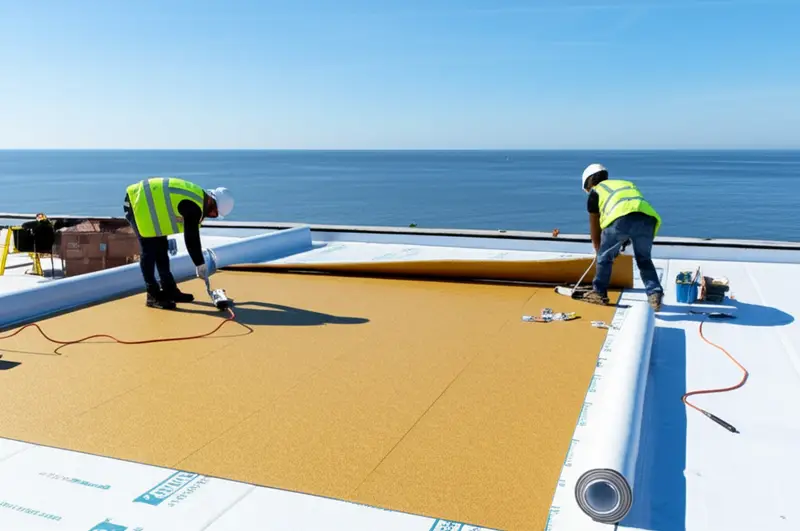
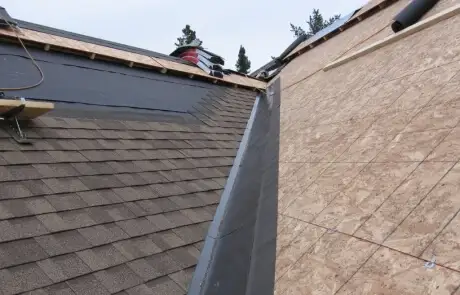
When shingles are replaced, a self-adhered membrane goes directly on the deck along the eaves, in the valleys and around chimneys and skylights. IKO explains that this ice and water protector bonds to the deck and seals around nail shanks, which helps keep backed-up water out of the house. Keep in mind that it is a second line of defence: it limits leaks, but it does not stop an ice dam from forming if the attic is still warm.
What about heat cables?
Heat cables can keep a drainage path open along the eaves and gutters. They do not fix the heat loss behind the problem, so treat them as a complement to sealing, insulation and ventilation rather than a solution.
When to call a roofer
It is time to bring in a professional if:
- water is dripping inside or new stains appear on the ceiling;
- ice dams come back every winter in the same spot;
- gutters are sagging or pulling away under the weight of ice;
- shingles look lifted or flashing looks bent once the snow melts;
- your attic shows frost, damp insulation or ice on the nail tips.
An emergency roof repair stops the water first. A roof inspection then pins down the real cause, whether it is an air leak, missing insulation, poor ventilation or a construction detail at the eaves.
Dealing with ice dams this winter? We can help
Les Toitures Garcia was founded by Gerald Garcia and brings more than 15 years of roofing experience to homes and businesses across Greater Montréal, Laval, the North Shore and the South Shore. We are RBQ licensed (licence 5705-4066-01) and fully insured, and our emergency service runs 24/7.
For a free estimate, call (514) 451-6636 or request an estimate online. We reply within 24 hours.